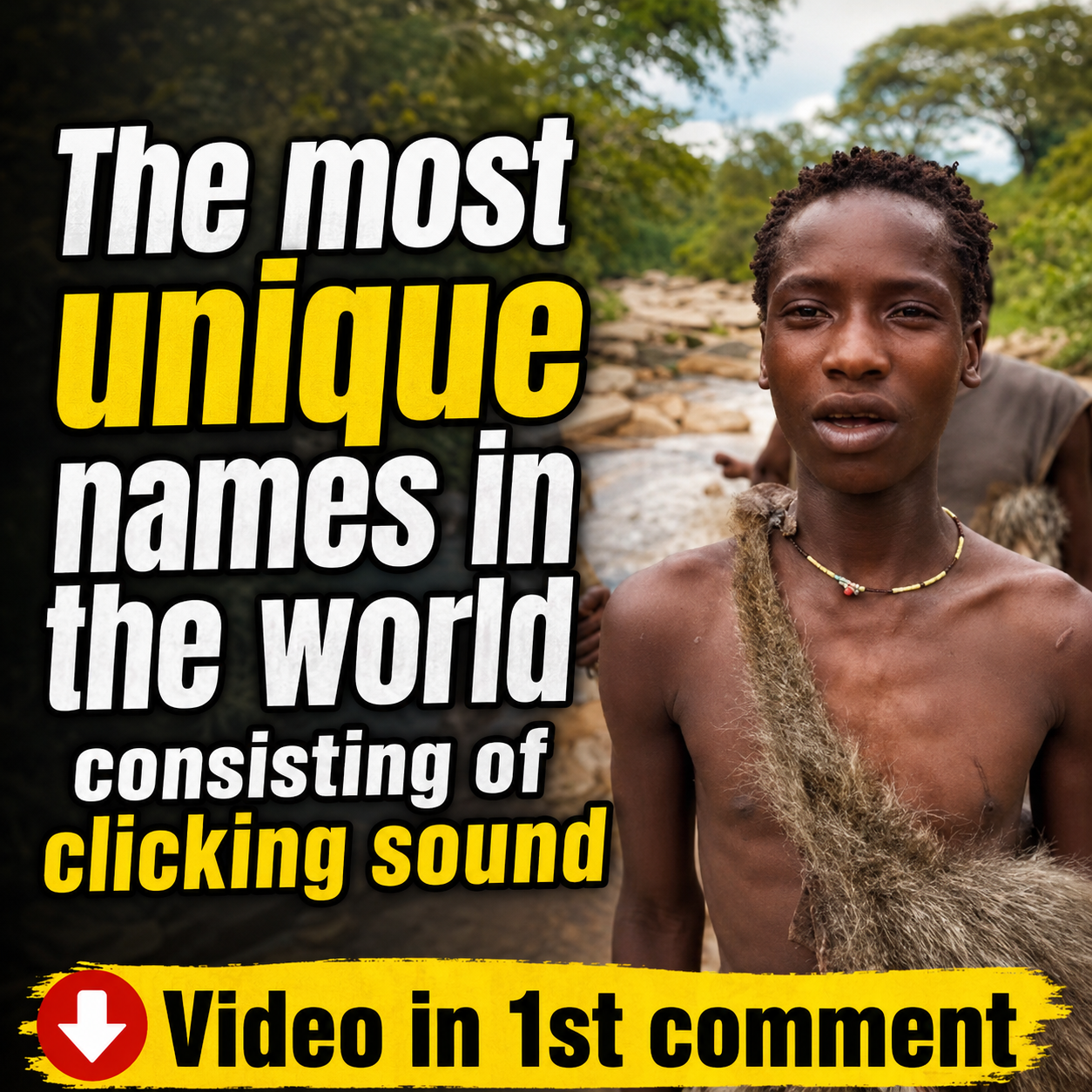
Did you know that some of the most fascinating languages on Earth are spoken using clicking sounds? Deep in southern Africa, several indigenous communities communicate through languages that include sharp clicks, pops, and tongue sounds unlike anything heard in most parts of the world.
These extraordinary languages are mainly spoken by the Khoisan people, one of Africa’s oldest indigenous groups. Their speech contains different types of clicks made by placing the tongue in specific positions inside the mouth. Some clicks sound similar to the noise used to call a horse, while others resemble a popping or snapping sound. For native speakers, these sounds are as natural as ordinary letters are in English.
One of the most famous click-based languages is Xhosa, spoken widely in South Africa and known globally because it was the native language of Nelson Mandela. In Xhosa, clicks are represented in writing with letters like “c,” “x,” and “q,” each producing a completely different sound. A single word can combine multiple clicks with traditional consonants and vowels, making the language incredibly rich and musical.
Linguists consider these languages among the oldest surviving forms of human communication. Some experts believe click sounds may even preserve elements of early human speech dating back thousands of years. Despite their cultural importance, many of these languages are endangered as younger generations increasingly shift toward global languages.
Today, efforts are growing across Africa to preserve and teach these remarkable languages before they disappear forever. Schools, researchers, and cultural organizations are recording pronunciations, stories, and traditions to ensure future generations can continue speaking one of humanity’s most unique linguistic treasures.
What may sound unusual to outsiders is, for millions of Africans, a beautiful and deeply meaningful part of everyday life.