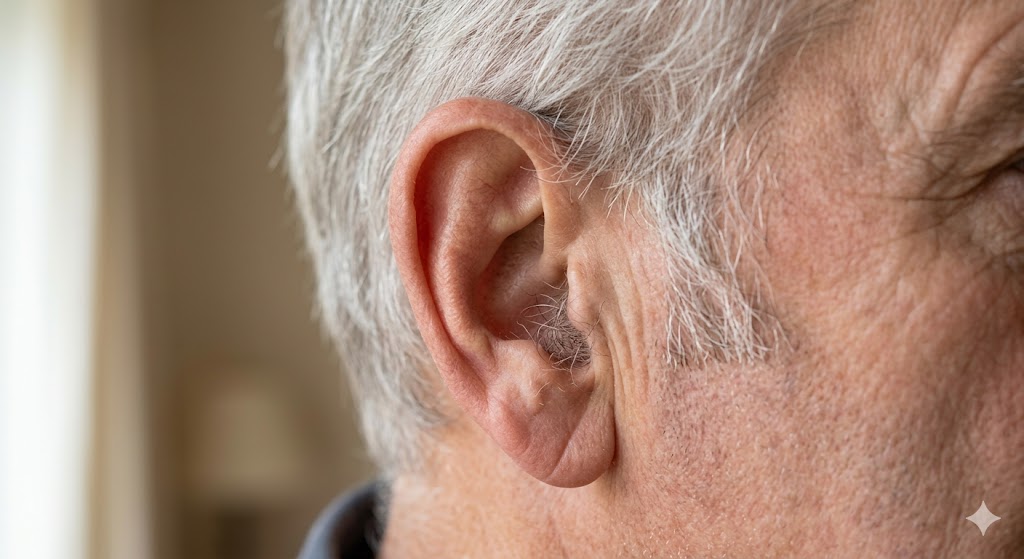
As we navigate the various stages of life, our bodies undergo numerous physiological transformations. While many of these changes—such as shifts in skin elasticity or metabolism—are widely discussed, others are often surrounded by mystery or slight social discomfort. One such phenomenon is the appearance of longer, more noticeable hair in the ear canal as we age.
Although it may feel unexpected, ear hair growth is a standard biological process. It is rarely a cause for medical concern and is predominantly driven by the intersection of aging, hormonal shifts, and genetic predisposition. By demystifying this process, we can separate common myths from scientific reality and gain a better appreciation for how the body evolves over time.
Why Does Ear Hair Become More Noticeable With Age?
The aging process affects different regions of the body with varying intensity. One of the most intriguing aspects of this transition is the paradoxical behavior of hair follicles. While many individuals experience a thinning of hair on their scalp, they may notice the opposite effect in other areas, such as the eyebrows, nose, and ear canals.
The Shift in Hair Follicle Behavior
As we grow older, the hair follicles—the tiny structures in the skin that produce hair—respond differently to the signals provided by our internal environment. The growth cycles of these follicles can lengthen, leading to hairs that grow for longer periods before shedding. Consequently, these hairs become more visible, thicker, or coarser than they were during our younger years.
The Role of Hormones in Hair Growth
Hormones serve as the body’s chemical messengers, and they play a fundamental role in regulating hair patterns throughout our lives. Specifically, a group of hormones known as androgens, which includes testosterone, is primarily responsible for influencing hair distribution.
Hormonal Sensitivity and Distribution
Hair follicles across the body are not uniform in their sensitivity to these hormones. In some areas, hormones may stimulate growth, while in others, they may cause follicles to miniaturize. As we age, the cumulative exposure to these hormonal signals and changes in local sensitivity contribute to several visible shifts:
Scalp Changes: A common trend toward thinning hair or a receding hairline.
Facial and Ear Growth: An increase in density and thickness of hair in the ears, nose, and eyebrows.
Pattern Variation: Changes in facial hair distribution that are entirely normal and expected.
These shifts are generally considered a hallmark of the natural aging process rather than an indication of a hormonal imbalance or endocrine disorder.
Genetics: The Blueprint of Aging
While aging sets the stage for these changes, our genetic makeup determines the specific details. Family history remains the most reliable predictor of hair growth patterns. If parents or grandparents developed noticeable ear hair in their later years, it is statistically likely that their descendants will follow a similar trajectory.
Understanding Genetic Influence
Genetics dictate a wide range of factors, including the rate of hair growth, the thickness of individual strands, and exactly where on the body hair becomes most prominent. This is why two individuals of the exact same age can exhibit vastly different hair growth patterns; while one may experience minimal changes, another may see significant growth due to their unique genetic coding.
The Biological Purpose of Ear Hair
Though often viewed strictly through a cosmetic lens, ear hair is not without purpose. It serves as a natural defensive barrier for the ear canal, an area highly sensitive to external elements.
Environmental Defense: Fine hairs act as a filter, trapping dust, pollen, and other environmental debris before they can travel deeper into the ear canal.
Protection from Pests: These hairs create a physical barrier that helps deter insects or small particles from entering and potentially causing irritation or infection.
Natural Maintenance: By keeping the ear canal cleaner, these hairs support the body’s innate protective mechanisms, contributing to overall ear health.
Debunking Common Myths
Because of the lack of awareness surrounding this topic, several misconceptions have gained traction. Understanding the truth can alleviate unnecessary worry.
Myth: It indicates poor circulation. There is no scientific evidence linking the growth of ear hair to cardiovascular health or circulation issues.
Myth: It signals organ disease. Ear hair is not a recognized diagnostic indicator for liver, kidney, or other major organ pathologies.
Myth: It is a sign of a serious hormonal disorder. In the vast majority of cases, this growth is tied to standard aging and genetics, not medical dysfunction.
Myth: Removal makes it grow back thicker. This is a widespread misunderstanding. Trimming or removing hair at the surface level has no physiological impact on the hair follicle, meaning the hair will not grow back thicker or more rapidly.
Practical Insights for Grooming
For those who prefer to manage ear hair for aesthetic reasons, there are safe and effective methods to maintain a clean appearance.
Use Specialized Tools: Invest in a high-quality electric ear and nose hair trimmer. These devices are designed to reach sensitive areas safely without damaging the delicate skin of the inner ear.
Avoid Sharp Objects: Never attempt to use scissors or tweezers inside the ear canal, as this risks accidental cuts or damage to the eardrum.
Gentle Care: If grooming, ensure the area is clean and well-lit. Grooming should be done sparingly to respect the skin’s sensitivity.
Conclusion
Ear hair growth is a normal, expected component of the human aging process. It is a testament to how our bodies continue to adapt and change over the decades. Driven by a combination of fluctuating hormonal activity, the natural evolution of hair follicles, and inherited genetic traits, it is fundamentally a part of human development rather than a health concern. By understanding the science behind these changes, we can replace outdated myths with facts and approach the aging process with greater confidence and clarity.