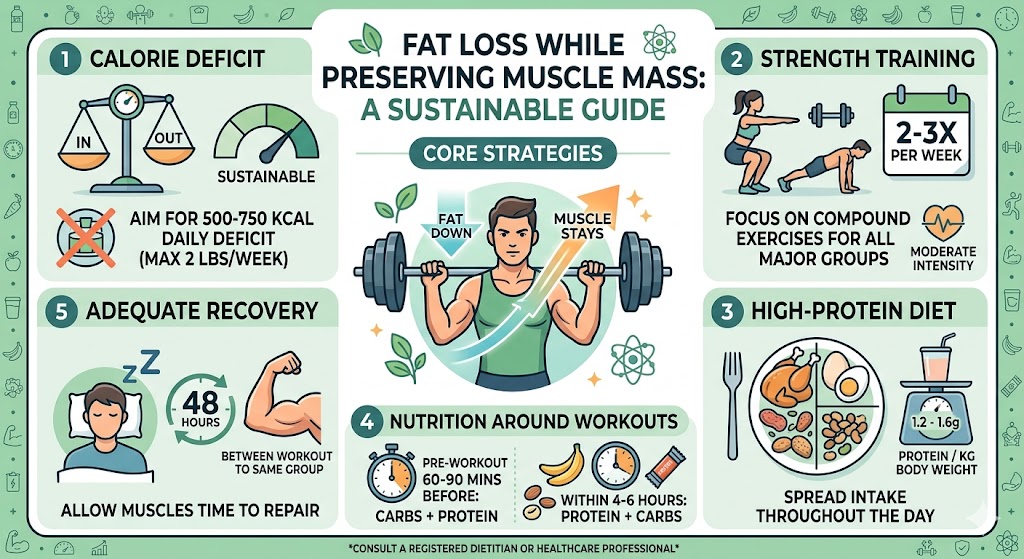
Achieving fat loss without sacrificing muscle mass is one of the most common challenges in fitness and health. Many people make the mistake of focusing solely on drastic calorie restriction, which often leads to muscle loss and a slowed metabolism. To achieve a toned and healthy physique, it is essential to follow a balanced approach that prioritizes muscle preservation while the body uses fat as its primary energy source.
Understanding the Balance: Calorie Deficit and Muscle Protection
The secret to losing fat lies in creating a caloric deficit—consuming fewer calories than the body burns. However, when this deficit is too aggressive, the body may begin breaking down muscle tissue for energy. To avoid this, the deficit should be moderate, typically 300 to 500 calories below your total daily energy expenditure (TDEE).
Protein plays a central role in this process. It provides the necessary amino acids to repair and build muscle fibers that are stressed during exercise.
Recommended Intake: Most experts recommend consuming 1.6 to 2.2 grams of protein per kilogram of body weight.
Distribution: Distributing protein intake evenly throughout all meals helps to consistently stimulate muscle protein synthesis.
Resistance Training: A Signal for Your Body
Weightlifting or strength training is critical for sending the body a signal that muscle mass is still necessary for survival. Without this stimulus, the body is more prone to sacrificing muscle to conserve energy.
Gym Priorities
Heavy Resistance Training: Focus on compound movements—such as squats, deadlifts, and bench presses—which activate multiple muscle groups simultaneously.
Intensity: Maintain training intensity. Even if your strength decreases slightly due to the caloric deficit, strive to lift as heavily as possible within safe boundaries.
Manage Cardio: While cardio is beneficial for cardiovascular health and burning calories, overdoing it can interfere with muscle recovery. A moderate form, such as brisk walking, is often more effective.
Strategic Nutrition and Recovery
Beyond protein, the quality of your calories is key. Carbohydrates should not be eliminated entirely, as they are a primary fuel source for intense workouts. Consuming the majority of your carbohydrates around your workout window can support performance and recovery.
Furthermore, sleep and stress management are vital. A lack of sleep increases cortisol levels, which can promote muscle loss and fat retention, particularly around the midsection. Aiming for 7–9 hours of quality sleep is essential for the success of any fitness program.
Monitoring Progress Beyond the Scale
Progress should be measured by more than just the scale, which cannot distinguish between fat and muscle loss. Instead, use these more accurate indicators:
Progress Photos: Take photos every 2–4 weeks in the same lighting conditions to visualize changes.
Tape Measurements: Measuring the waist and other body parts offers a better indication of changes in body composition.
Training Performance: If you are maintaining or increasing your strength, it is highly likely that you are successfully preserving your muscle mass.
Conclusion
Losing fat without losing muscle is not an overnight process. It requires patience, a protein-rich diet, consistent strength training, and a lifestyle that supports recovery. By focusing on these pillars, you will achieve sustainable results that help you feel stronger and healthier in the long term.
Note: If you have any medical conditions or concerns regarding your diet, always consult with a physician or a licensed dietitian before making significant changes to your lifestyle.